
Key Takeaways
- Starting your moving checklist 8 weeks out gives you enough time to compare Orlando movers, declutter properly, and lock in a date before the busy season fills up.
- Florida has specific address-change requirements, and notifying utilities, the DMV, and your child’s school at least 4 weeks early prevents costly gaps in service.
- Avoid booking Saturday moves during May, June, or July in Orlando: rates spike 20-30% and truck availability drops sharply during peak season.
- The 2-week window before moving day is your last real chance to confirm logistics, pack non-essentials, and prepare for Orlando’s afternoon thunderstorm season if you’re moving June through September.
Moving in Orlando is not like moving anywhere else. Between the afternoon thunderstorms that roll through from June to September, snowbird traffic clogging I-4 and the 408 from October through April, and a rental market that moves faster than almost any city in the country, timing and preparation matter more here than they would in, say, Cincinnati. A solid moving checklist Orlando residents can actually follow makes the difference between a smooth transition and a stressful scramble.
This guide breaks down everything you need to do across the 8 weeks before your move, from the first decluttering pass in your Baldwin Park townhouse to the final walkthrough in your new Lake Nona home. Each phase has a specific job. Skip one and you’ll feel it on moving day.
Whether you’re relocating across town or arriving in Central Florida for the first time, the steps below will keep you on track and off the phone with your mover at midnight the night before.
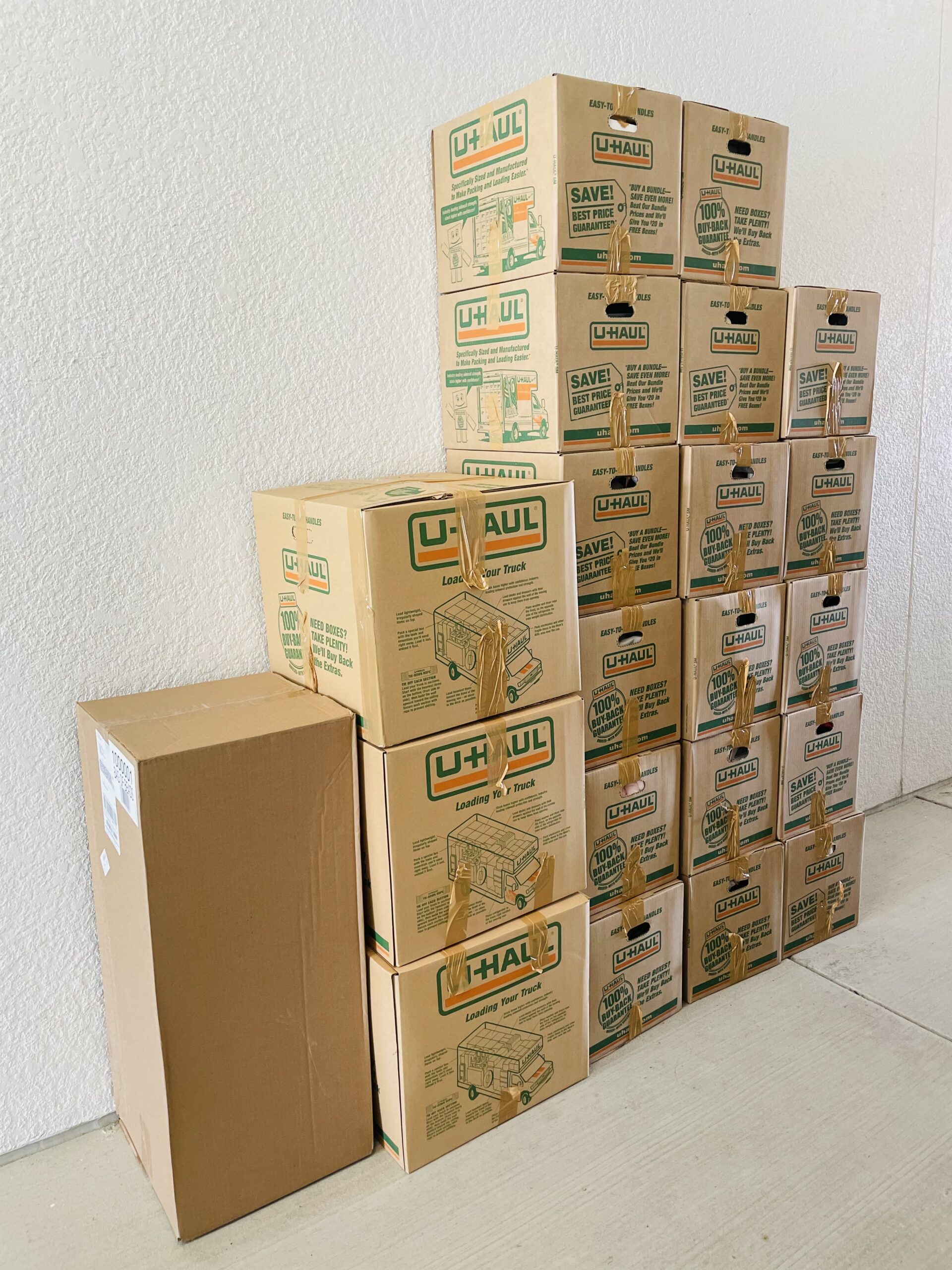
8 Weeks Out: Declutter, Budget, and Research Orlando Movers
Eight weeks feels like forever. It isn’t. This is the phase most people skip or rush, and they pay for it in two ways: they move things they should have donated, and they end up booking a mover at the last minute at peak rates.
Declutter First, Pack Later
Go room by room with three categories: keep, donate, and trash. Be honest. Moving a couch you hate to a new address just means you’ll have a couch you hate at the new address. Donation pickup services like Habitat for Humanity ReStores in the Orlando area will schedule free hauls for furniture. For electronics and hazardous items like old paint, Orange County has drop-off events throughout the year.
In my experience moving Orlando families for nearly two decades, the biggest waste of money I see is people paying to move boxes they never unpack. I had a customer in College Park who moved the same four sealed boxes three times across three different apartments before she finally opened them. Don’t be that person.
Set a Real Budget
A local 2-bedroom move in Orlando typically runs $650 to $950 for a 2-hour minimum plus travel time, assuming a straightforward ground-floor or elevator-accessible situation. A 3-bedroom home with stairs will land closer to $1,100 to $1,500 depending on distance and time of year. Check out the full breakdown of what it costs to move in Orlando in 2026 to build a number you can actually plan around.
Don’t forget the hidden line items: boxes, packing tape, mattress bags, COI fees if your new building requires one, and the cost of a storage unit if there’s a gap between your move-out and move-in dates.
Start Researching Movers Now
Get at least three quotes. Check that every company has a valid Florida IM license (you can verify this through the Florida Department of Agriculture and Consumer Services). Read Google reviews specifically, and look for recent ones from 2025 and 2026. A great reputation from four years ago doesn’t tell you much about a company’s current crew quality.
Ask each mover specifically: Do you charge a long-carry fee? What’s your stair fee? Are your crews employees or day laborers? Those three questions alone will separate the serious companies from the ones that quote low and surprise you on moving day.
6 Weeks Out: Book Your Mover and Gather Supplies
Six weeks out is your booking deadline. I’d argue it’s actually your hard deadline if you’re moving between May and August. Orlando’s summer move season is the busiest stretch of the year, and quality crews book up fast. Don’t book Saturday in May. Here’s why: Saturday slots in late May and June fill up in under 48 hours for reputable companies, and what’s left tends to be the movers you don’t want showing up at your door.
Midweek moves, specifically Tuesday through Thursday, are almost always cheaper and easier to schedule. If your employer offers a moving day as a paid personal day, use it on a Wednesday.
What to Ask When You Book
- Will you receive a written binding estimate or a non-binding one?
- What is the cancellation and rescheduling policy?
- Does the crew do the shrink-wrapping, or do you need to prep furniture yourself?
- Is there a minimum charge, and how is travel time billed?
A customer in Thornton Park last month booked us three days before her intended move date because another company never confirmed. We had one opening that week on a Thursday. She got her move done, but she also paid $120 more than she would have with two weeks’ notice because we had to pull a crew from a different route. Booking early is genuinely the single easiest way to save money on a local move.
Start Collecting Supplies
You’ll need more boxes than you think. A 2-bedroom apartment typically requires 40-60 boxes of mixed sizes. Buy dish packs separately for your kitchen, they’re thicker and worth the extra cost. Liquor stores near UCF and Mills 50 often have free boxes if you call ahead. Stock up on packing paper rather than newspaper: newspaper ink transfers to everything.
Peak season fills fast, and locking in your date now means better availability and better pricing.
4 Weeks Out: Utilities, Schools, and Florida Change of Address
This is the administrative phase. Not glamorous, but skipping any of these will cause real headaches in the weeks after your move.
Notify Your Utilities
In Central Florida, your main utility contacts are:
- OUC (Orlando Utilities Commission) for electricity and water if you’re in the City of Orlando
- Duke Energy Florida for Orange, Osceola, and parts of Seminole County
- Spectrum, AT&T, or Brightspeed for internet (schedule new service installation early, technician slots are often 2-3 weeks out)
- TECO Peoples Gas if your home uses natural gas
Call to stop service at your old address and start service at your new one on the same day, your actual move date. Don’t leave a gap. Don’t let it run on the old address an extra week unless you need overlap for cleaning.
Florida-Specific Change of Address Steps
You have 30 days after moving in Florida to update your driver’s license address with the FLHSMV. You can do this online at flhsmv.gov. Your voter registration also needs updating separately through the Florida Division of Elections portal. These are two different forms that many people miss.
Submit a USPS mail forwarding request at usps.com at least 2 weeks before your move date to catch anything that slips through. And notify your bank, insurance providers, and any subscription services directly: USPS forwarding doesn’t always catch first-class mail from every sender.
If You Have Kids in School
Orange County Public Schools, Seminole County Public Schools, and Osceola County Public Schools all require enrollment paperwork at the new school before your child can start. If you’re moving between districts, get your withdrawal paperwork from the current school and bring proof of new address (a lease or closing document works) to the new school’s front office. Start this process 4 weeks out so there’s no gap in enrollment.

2 Weeks Out: Pack Non-Essentials and Confirm Moving Day Details
Two weeks before your move, start packing everything you won’t need between now and moving day. Books, off-season clothes, decorative items, extra linens, and anything in storage areas go first. Label every box on the top AND one side so you can read it when boxes are stacked.
Have some cash ready for the crew as well. Here is what to tip movers in Orlando, with amounts for a half-day and a full-day job.
The “Open First” Box Strategy
Pack one clearly labeled box or bag per person with what they’ll need for the first 48 hours in the new home: phone charger, two changes of clothes, toiletries, medications, a dish, a cup, and a fork. This box travels in your personal vehicle, not the moving truck. It sounds obvious, but I’ve watched grown adults dig through 40 boxes at 9 PM looking for their toothbrush. Pack the open-first box. It matters.
Confirm Details With Your Mover
Call your moving company at the 2-week mark to confirm: start time, number of movers, truck size, any special items like a piano or gun safe that need extra crew or equipment. If you’re moving into an apartment with elevator access restrictions, review the specific rules around apartment moves, elevators, and parking in Orlando to make sure your building’s requirements are already communicated to your crew.
Weather Planning for Orlando Moves
If your move falls between June and September, build a rain contingency into your morning. Orlando’s afternoon thunderstorms are almost daily from 2 PM to 5 PM. An early start time (7 or 8 AM) is the single best weather insurance you have. Most professional crews can complete a 2-3 bedroom move before the storms roll in if you start early enough. Ask your mover specifically what their rain protocol is: good companies have tarps, plastic runners, and a plan. Others don’t.
Moving Day and Post-Move Tasks for Orlando Residents
Moving day itself should feel like execution, not planning. If you’ve followed the checklist above, most of the hard decisions are already made.
Morning of Your Move
- Walk every room and closet before the crew arrives to confirm nothing is being left behind.
- Take photos of any existing damage to walls, floors, and appliances at both addresses. Time-stamped phone photos are enough.
- Have cash or a card ready for tips. A standard tip is $20-$40 per mover for a local move, more if it was a complex job or a hot day. Crews working in July in Orlando heat genuinely earn it.
- Keep pets and kids out of the crew’s path. This is a safety issue, not a preference.
Post-Move Orlando Checklist
Within 7 days of arriving at your new address:
- Test all smoke and carbon monoxide detectors. Florida requires them; make sure they work.
- Locate your electrical panel and water shutoff valve. In an emergency, you want to know where these are before the emergency happens.
- Update your address with the FLHSMV if you haven’t already.
- Register your vehicle in Florida if you moved here from out of state. You have 10 days to do this once you establish residency, not 30.
- Find your nearest urgent care, pharmacy, and grocery store. In new neighborhoods like Horizon West or parts of Osceola County, the closest Publix or CVS might be farther than you’re used to.
If you’re renting at your new place, do a written walkthrough with your landlord on day one and document everything in writing. The complete renter’s moving checklist for Orlando apartment dwellers has a thorough breakdown of exactly what to document and when.
Frequently Asked Questions
How far in advance should I book a moving company in Orlando?
For moves between May and August, book at least 4-6 weeks out, and 6-8 weeks is safer if you want a weekend date. For fall and winter moves, 3-4 weeks is usually enough. Waiting until 1-2 weeks out limits your options and typically costs more.
What is the cheapest day of the week to move in Orlando?
Tuesday, Wednesday, and Thursday are consistently the least expensive days to move. Weekend moves cost 15-25% more on average, and Friday/Monday moves are also pricier due to demand around the weekend. A midweek move also means less traffic on I-4 and the 408.
How do I update my address in Florida after moving?
You need to update your driver’s license address with the FLHSMV within 30 days of moving, which can be done online at flhsmv.gov. Voter registration is updated separately through the Florida Division of Elections portal, and you should also file a USPS mail forwarding request at usps.com at least 2 weeks before your move date.
What should I do if it rains on my moving day in Orlando?
Schedule an early morning start time (7 or 8 AM) during summer months to beat the afternoon storms that typically arrive between 2 and 5 PM. Confirm that your moving company has tarps, plastic floor runners, and a rain protocol in place. Most professional crews will continue working in light rain with proper protection for your furniture and floors.
How much does a local move in Orlando cost in 2026?
A local 2-bedroom move in Orlando typically costs between $650 and $950, while a 3-bedroom home with stairs usually runs $1,100 to $1,500. Prices vary based on the day of the week, the time of year, and factors like long carries or elevator access. Getting 3 written quotes and comparing them is the best way to find accurate pricing for your specific move.
If you’re ready to stop guessing and start planning, the team at Orlando Express Movers is ready to walk through your timeline with you and lock in a date that works.
Orlando Express Movers is a licensed Florida moving company offering free, no-obligation quotes for local and long-distance moves. Get your date on the calendar before it fills up.
Moving in Orlando or Central Florida? Orlando Express Movers handles residential, commercial, piano, and packing and unpacking moves. Orlando movers or request a free quote, and call (321) 304-0386.
Short on time? Read our Last-minute move? A 2-week emergency relocation guide.
Choosing an Orlando neighborhood?
Going through a separation? Read moving after a divorce or separation in Orlando.