
You’ve got the visa. You’ve accepted the job, the university admission, or the transfer. Now comes the part nobody prepares you for — actually getting yourself and your life across an ocean and into an Orlando apartment or house that doesn’t have any of your stuff in it yet.
Moving internationally is a different animal than moving across town or even across the country. There are customs forms, shipping containers, a credit system that doesn’t know you exist, and a hundred small things (like the fact that American light switches go up for “on”) that nobody thinks to mention.
Here’s what you actually need to know.
What You Can and Can’t Bring Into the US
US Customs and Border Protection has opinions about what enters the country. Most of your household goods — furniture, clothes, books, electronics — come in duty-free as long as they’re used personal belongings, not brand new items you’re planning to resell.
Things that will cause problems at customs: Food items (especially meat, dairy, produce, and spices in unmarked containers), plants and soil, certain medications (bring a prescription letter from your doctor, in English), firearms (strict regulations — research thoroughly before attempting), and large amounts of cash over $10,000 (must be declared, not prohibited).
Paperwork you’ll need: A detailed inventory of everything you’re shipping (in English), your passport and visa, proof of your US address, receipts for any high-value items (electronics, jewelry, art), and your customs declaration form (CBP Form 6059B).
Don’t try to wing it with customs documentation. One missing form can hold your entire shipment for weeks.
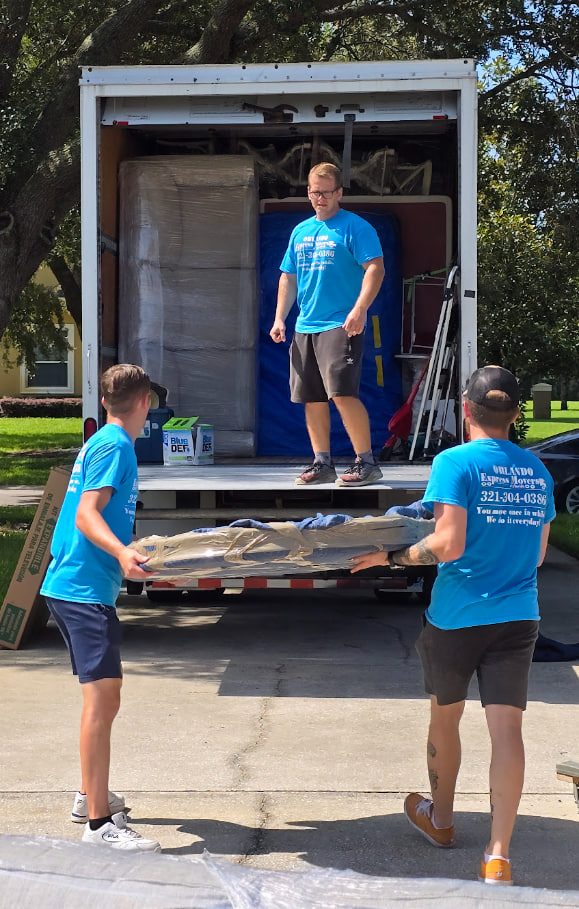
Shipping Your Life Across an Ocean
You have two real options: sea freight and air freight. Most people use a combination.
Sea freight is how you move the bulk of your belongings. A 20-foot container holds roughly a one-bedroom apartment’s worth of furniture. A 40-foot container handles a full house. Door-to-door shipping takes 4–8 weeks from Europe, 6–12 weeks from Asia, and 2–4 weeks from the Caribbean or South America. Cost ranges from $3,000 to $10,000+ depending on origin, volume, and whether you’re sharing a container (consolidated shipping) or filling your own.
Air freight is for things you need immediately — a few boxes of essentials, documents, medications. It’s fast (days, not weeks) but expensive: $5–$10 per pound. Use it sparingly.
The smart approach: Ship the bulk of your stuff by sea 6–8 weeks before your move date. Fly with two large suitcases of essentials. Air-freight a few boxes of things you’ll need in the first week. Live light for the first month while your shipment clears customs and gets delivered.
Your Car: Bring It or Leave It?
Short answer for most people: leave it.
Importing a vehicle to the US involves meeting EPA emissions standards and DOT safety standards, which most foreign-market cars don’t meet without expensive modifications ($2,000–$10,000+). The process takes weeks, requires a customs bond, and you’ll still need to register and insure it in Florida afterward.
Unless you’re bringing a car that’s over 25 years old (exempt from EPA/DOT requirements) or was originally manufactured for the US market, you’re better off selling it at home and buying one here. Used cars in Orlando are plentiful, and you’ll need one — Orlando isn’t a city where you can easily live without a car.
Getting a Florida Driver’s License
Florida allows you to drive on a valid foreign license for up to 30 days. After that, you need a Florida license.
The process: Visit a Florida DHSMV office with your passport, visa, I-94 arrival record, proof of Florida address (utility bill or lease), and Social Security number (or a letter of ineligibility from the SSA if you don’t have one yet). You’ll take a written knowledge test, a vision test, and a road test. Some countries have reciprocal agreements that waive the road test, but don’t count on it — check with DHSMV before your appointment.
Study the Florida Driver’s Handbook. American road rules have quirks that surprise international drivers: right turns on red are legal (unless posted otherwise), school buses with flashing red lights mean you stop — even on a four-lane road, and speed limits are in miles per hour, not kilometers.
The Credit Problem (and How to Solve It)
This is the single biggest frustration for international newcomers. The US credit system doesn’t care about your perfect credit history in your home country. As far as American lenders and landlords are concerned, you don’t exist financially.
This affects: Renting an apartment (landlords run credit checks), getting a cell phone plan, buying or leasing a car, and eventually buying a home.
Workarounds that actually work: Bring 3–6 months of rent in savings to offer landlords as reassurance. Get a secured credit card immediately (Capital One and Discover offer them to newcomers). Open a bank account as soon as you have your SSN or ITIN — Chase, Bank of America, and Wells Fargo all work with international newcomers. Ask your employer if they have corporate housing or landlord relationships. Some landlords will accept a larger security deposit instead of a credit check. Look into Stilt, Nova Credit, or other services that translate foreign credit history for US use.
Start building credit from day one. In 6–12 months, you’ll have enough history to function normally.
Setting Up Life Without an SSN
Your Social Security Number is the key to nearly everything in America, and it can take 2–4 weeks to arrive after you apply. In the meantime, you still need to set up a life.
Utilities: Duke Energy (Orlando’s main electric provider) and Orlando Utilities Commission will set up accounts with a passport and deposit. Internet providers (Spectrum, AT&T) usually require a deposit without an SSN. Water is typically included in rent for apartments or set up through Orange County Utilities.
Banking: Some banks will open accounts with a passport and visa. ITIN (Individual Taxpayer Identification Number) works as a temporary alternative for certain financial services.
Cell phone: Prepaid plans (T-Mobile, Mint Mobile) don’t require credit checks. Switch to a regular plan once you have an SSN and some credit history.
Finding Housing in Orlando
For your first home, rent — don’t buy. You need time to learn the city, build credit, and figure out where you actually want to live.
Neighborhoods popular with international residents: Lake Nona and Medical City area (diverse, newer, many international professionals), downtown Orlando (walkable, convenient, younger crowd), Dr. Phillips and Sand Lake Road area (strong international food scene, diverse community), Hunters Creek and Meadow Woods (affordable, diverse, family-friendly), and UCF area (international students, affordable, active social scene).
Budget for rent: One-bedroom apartments run $1,400–$1,800/month in most areas. Two-bedrooms run $1,700–$2,400. You’ll typically need first month, last month, and a security deposit upfront.
Orlando’s International Community
Orlando is more international than most people realize. UCF enrolls thousands of international students. The theme parks and hospitality industry employ people from dozens of countries. Tech companies and healthcare organizations recruit globally.
You’ll find established communities from Brazil, India, Puerto Rico, Colombia, Vietnam, Haiti, the Philippines, and many other countries — with restaurants, grocery stores, cultural organizations, and places of worship that help Orlando feel less foreign. The Hispanic Chamber of Commerce, Asian American Chamber, and various cultural associations are good starting points for networking.
Bringing Pets from Abroad
Pets need a health certificate issued by a licensed veterinarian within 10 days of travel, proof of current rabies vaccination (at least 30 days old), and a CDC import permit for dogs (rules changed in 2024 — check current requirements, as they’ve become stricter). Cats have fewer restrictions but still need health certificates. Some countries require additional blood tests or quarantine periods. Airlines charge $200–$500+ for in-cabin pets and more for cargo. Research your specific airline’s pet policy early — they vary wildly.
Expect Culture Shock (It’s Normal)
Even if you speak fluent English, living in America feels different. Tipping culture (15–20% at restaurants, $1–$2 for coffee shops), portion sizes, small talk with strangers, the reliance on cars for everything, and the pace of daily life will all take adjustment. Orlando’s laid-back vibe helps, and the city’s diversity means you’ll find people who understand exactly what you’re going through.
Give yourself grace for the first six months. It gets easier.
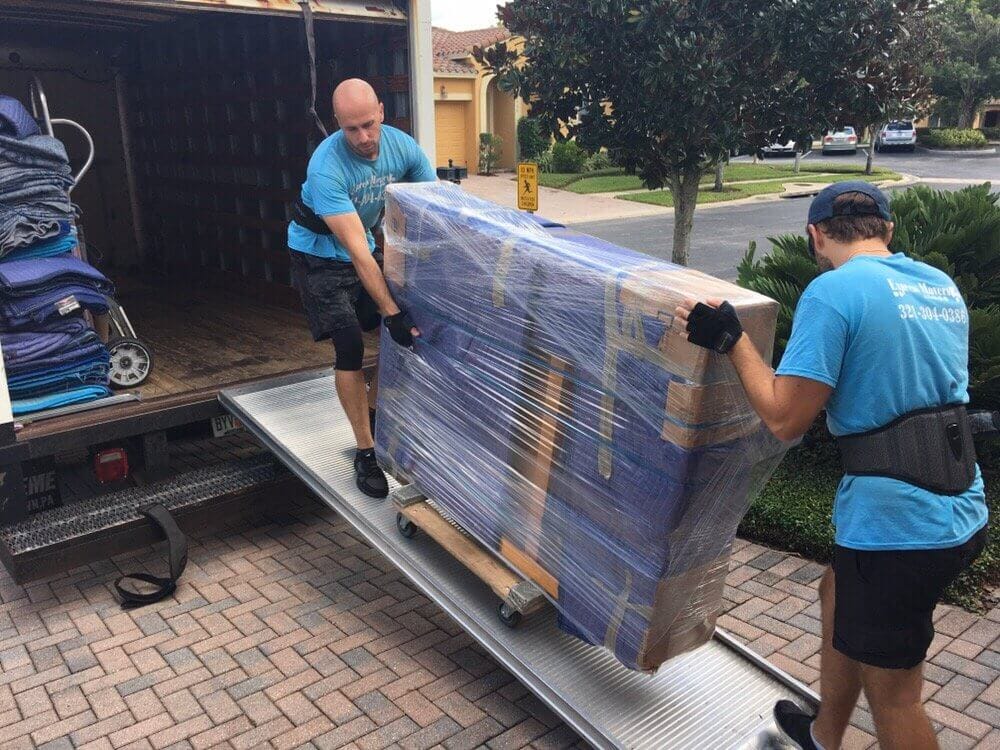
Orlando Express Movers — International Move Coordination
Orlando Express Movers works with international newcomers to handle the Orlando side of your move. Whether your shipment arrives at Port Canaveral or you’re moving from temporary housing into your first real Orlando home, we’ll get your belongings where they need to be.
We offer pickup and delivery of international shipping containers, local moves from temporary housing to your permanent home, unpacking and setup services, storage while you search for housing, and straightforward pricing with no surprises.
Contact Orlando Express Movers for a free quote. We’ve helped hundreds of international arrivals get settled in Orlando — and we’d be glad to help you too.